Description
Vela Wall Art: Pale Layers, Fine Lines and Architectural Calm
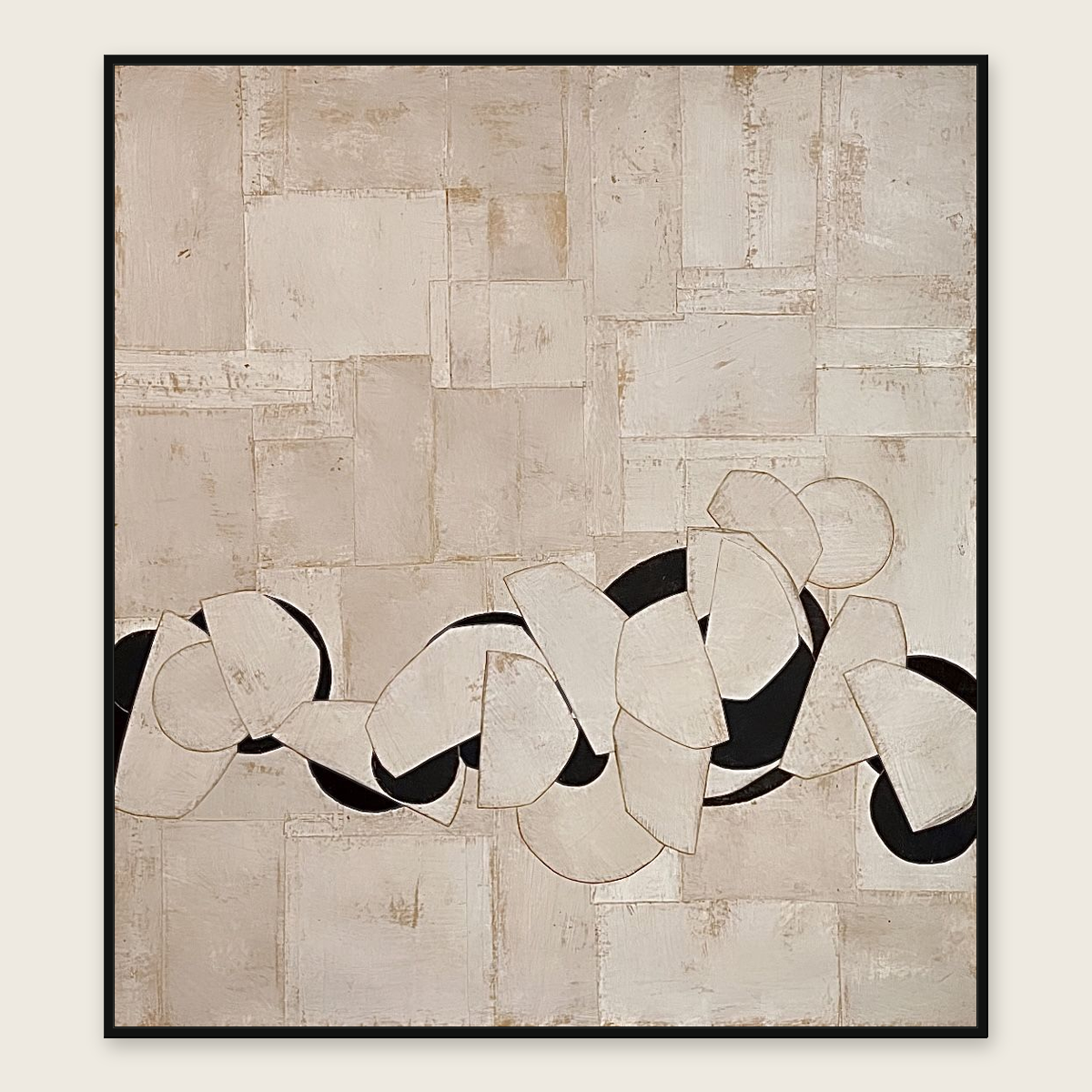
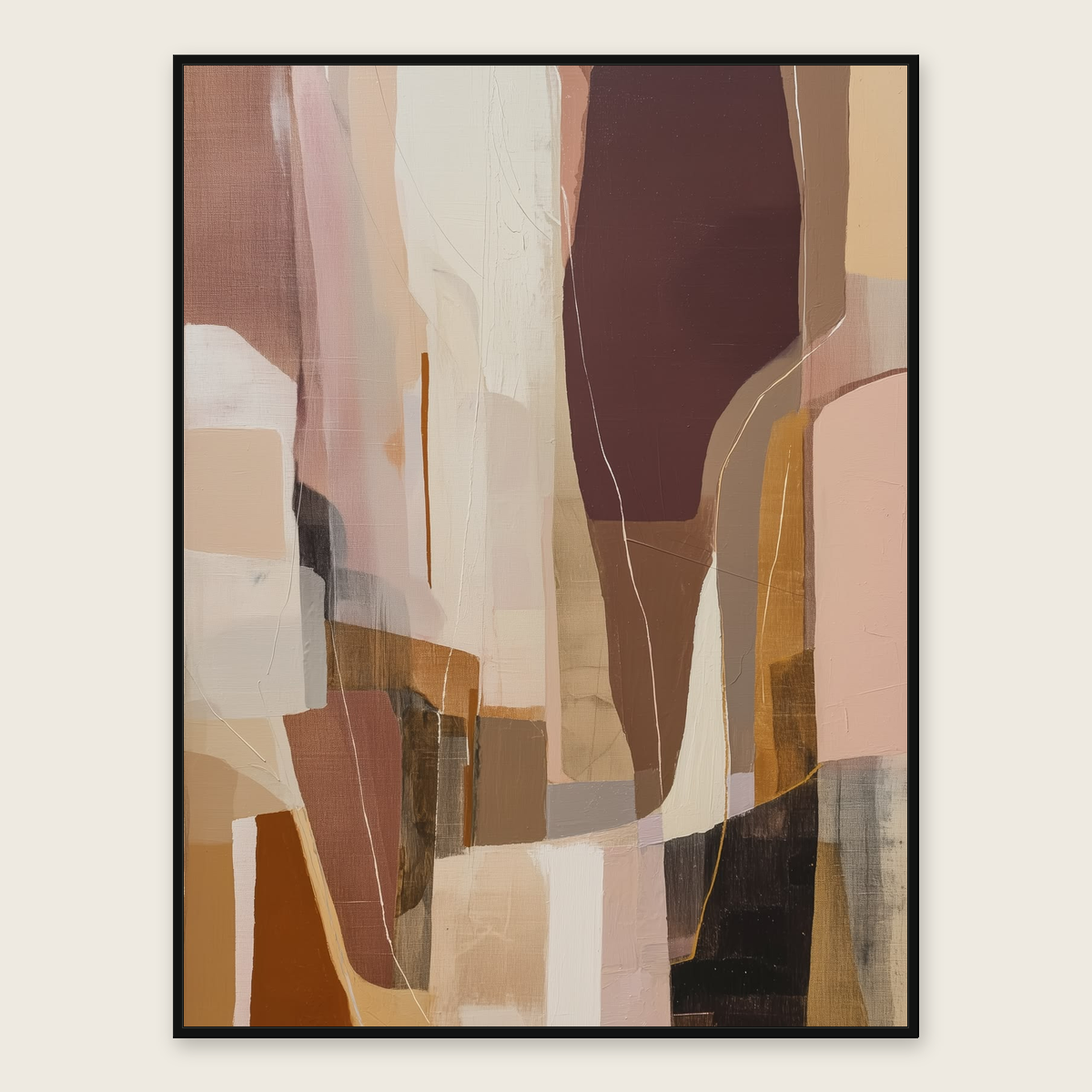
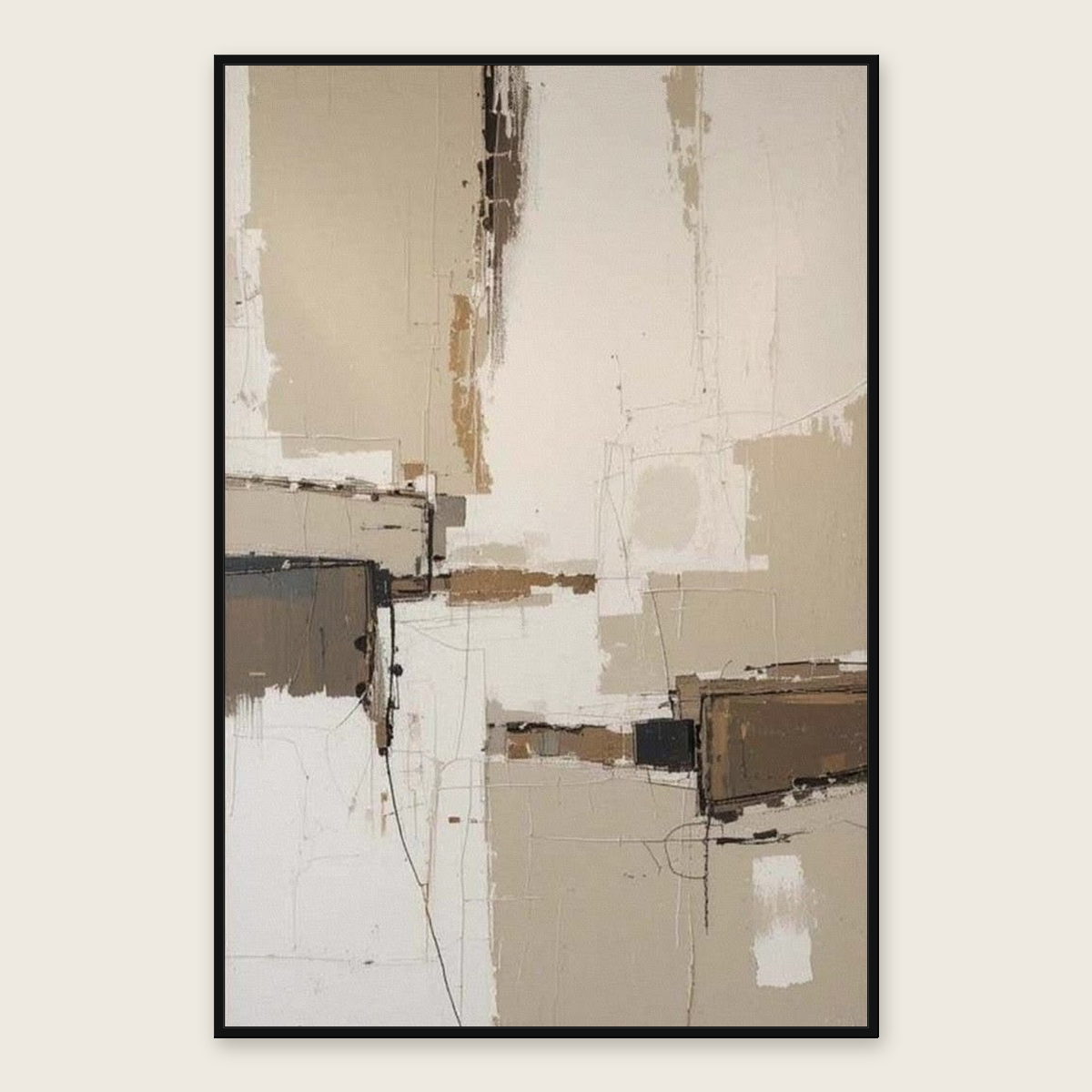
The Vela Wall Art brings a spacious, considered mood to a room through pale rectangular fields and delicate dark interruptions. Ivory, warm white and beige spread across the composition, while taupe and grey-brown patches give the arrangement a gentle sense of structure. Fine lines travel between the larger shapes, inviting a closer look without disturbing the overall calm.
An Open Architectural Composition
Broad pale blocks appear to overlap and dissolve into one another. Their uneven edges prevent the arrangement from feeling rigid, while small charcoal rectangles and broken horizontal marks establish a loose framework. The eye moves from one quiet area to the next, following a fine line or a darker junction. Vela has the ordered feeling of an architectural sketch, softened by gaps, faded-looking passages and generous areas of light colour.
Ivory, Beige and Soft Charcoal
The palette stays close to familiar interior neutrals. Ivory and warm white keep the artwork light, with pale beige providing warmth and taupe giving the larger sections definition. Grey-brown and charcoal appear in smaller amounts, so the darker details remain measured. This balance suits a room where the main furnishings are already neutral and the wall needs interest through composition rather than a strong new colour.
Artistic Appearance and Finish
Scraped-looking layers and scratched-looking marks add an aged visual character to Vela. Some sections seem softly worn, while others have clearer rectangular edges. These differences give the image depth at close range.
A Defined Black Frame
A black frame gathers the dispersed marks into one composed feature. Its colour echoes the small dark areas within the artwork and gives the pale perimeter definition against a light wall.
Palette and Styling
Build around Vela with warm white walls, pale stone tones and furniture in subdued natural colours. A taupe chair or grey-brown cushion can pick up its quieter passages, while a black lamp introduces a small connection to the frame. Keep nearby decorative objects simple and allow some empty wall around the piece. The artwork already contains fine lines and layered edges, so large areas of plain fabric will help those details remain readable.
Perfect for Many Rooms
Living room: Position Vela on a broad wall beside a seating arrangement to bring definition to a calm neutral scheme.
Bedroom: Pair its pale layers with ivory bedding and a softly coloured headboard for a restful visual focus.
Entrance hall: Use the large scale to give a simple arrival space a deliberate centrepiece.
Study: Its restrained colour range can complement an uncluttered workspace, with the fine marks offering detail beyond the desk.
Design Style
Vela suits minimalist, contemporary and organic modern interiors. Its rectangular structure also works with clean-lined cabinetry, while the softened edges sit comfortably beside rounded seating. Repeat the colours selectively rather than matching every shade.
Key Features
- Open arrangement of large pale rectangular patches
- Fine broken lines and small charcoal accents
- Warm neutral palette with an aged visual appearance
- Black frame and confirmed 120 L × 180 H cm size
Care and Maintenance
To care for Vela, follow the supplier’s instructions once the medium and frame finish have been confirmed.
- Handle carefully and avoid touching the image surface.
- Keep away from damp conditions and strong direct sunlight.
- Do not apply water, cleaning sprays or solvents to unverified surfaces.
- Confirm the approved cleaning method and suitable wall fixings before installation.
Why Choose the Vela Wall Art?
Choose Vela when a room needs a generous artwork with quiet visual depth. The combination of broad light areas and smaller dark details gives it presence from across the room and interest on closer viewing. Its architectural character can support a carefully edited interior without making the wall feel crowded.
Final Thoughts
The Vela Wall Art brings light colour, delicate structure and a gently layered appearance together in one composed design. Give it space, echo a few of its neutral tones and let the fine details settle naturally into the room.